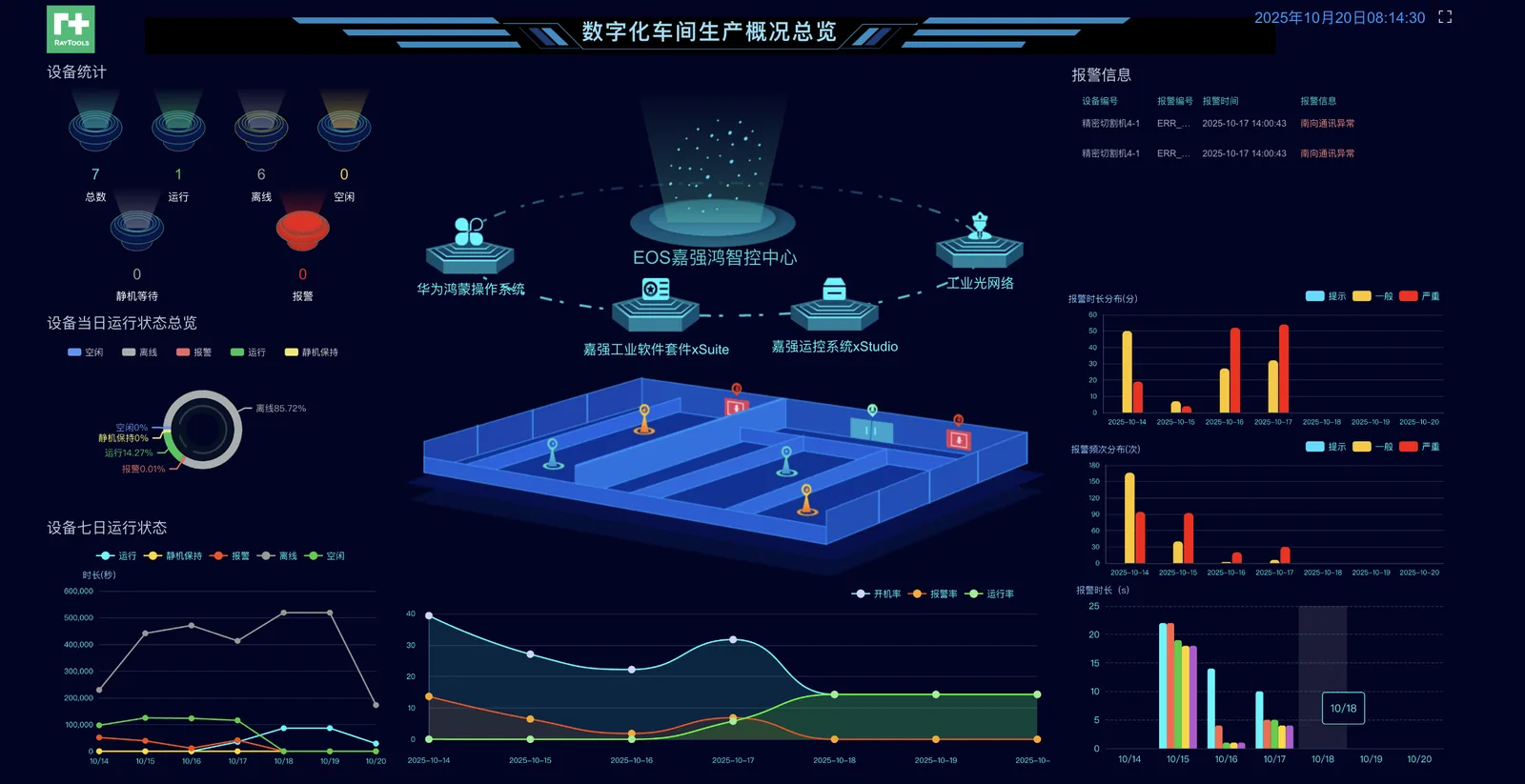
IMTS 2026 · McCormick Place · Chicago

Industrial AI that stays on the factory floor.

KUNWU connects machine data, operating knowledge, and governed workflows across equipment, production, and customer service — without replacing the PLC, CNC, or safety systems you already trust.

Sep 14–19, 2026 Chicago McCormick Place Governed industrial AI

01 / Company

Shanghai Yixu Intelligence, built for plants that already run.

We build KUNWU, a self-evolving industrial AI platform. It turns scattered equipment events, documents, and shop-floor know-how into a working intelligence layer across three domains: equipment service, production, and customer operations.

KUNWU sits between machines, people, and enterprise systems. Recommendations stay inside expert bounds. Deterministic control still executes. Independent safety interlocks keep final authority.

The name: Kunwu is the legendary ore mountain whose bronze forged blades that cut jade like clay. Data as ore, models as furnace, intelligence forged into working tools.

  • 01Close to the processStart from one named machine and one measurable loss.
  • 02Connect, do not replaceOPC UA, MQTT, Modbus, PLC/CNC, MES, ERP, CRM and the systems already in place.
  • 03Governed actionShadow mode, approval, audit, versioning, and rollback before write-back.
  • 04Edge-readyLocal inference and on-site data options when the factory cannot leave the floor.

02 / Platform

From machine signals to governed action.

Not a general-purpose chatbot. An agent platform that senses the floor, understands the business, calls the systems, and learns from the result.

  1. Sensemachines, events, context
  2. Reasondata, rules, knowledge
  3. Acttools, workflows, systems
  4. Feedbackapproval, limits, outcome
  5. Evolvecases, models, standards
Model layer

Industry LLM for language and orchestration. Specialist models for anomaly detection, remaining useful life, and vision.

Agent layer

Equipment, scheduling, kitting, inventory, and service agents that understand, reason, and coordinate with each other.

Tool layer

Knowledge base and retrieval, workflow engine, optimization solvers, API calls, permissions and audit.

Systems layer

Sensors, PLC and CNC, MES, ERP, CRM, and after-sales service systems through standard interfaces.

  1. Build the fact base

    One continuously updated record of manufacturing reality: equipment state, process parameters, quality inspection, material movement, energy, orders, and cost.

  2. Deploy the agents

    Predictive maintenance, quality root cause, dynamic scheduling, energy and emissions, and supply resilience agents read live signals and call optimization, forecasting, and SPC tools to reason about them.

  3. Close the loop with systems

    Bind to MES, SCADA, PLC, AGV, and warehousing so sense, judge, execute, and feed back becomes one governed circuit rather than four disconnected meetings.

  4. Review and evolve

    Execute, review, learn, evolve. Manufacturing experience is captured, reused, and improved instead of walking out the door with the operator who held it.

A shared language for the plant

Equipment, work orders, recipes, quality events, maintenance cases, and people sit in one governed operational context. Analytics, knowledge, and workflows read the same shop-floor facts.

Equipment Work order Recipe Quality Maintenance People Governed context

03 / What changes

Six problems every plant recognizes.

Faults surface too late

Failures are found after the line stops, so downtime is unplanned.

Fix-when-broken becomes condition monitoring with graded, routed early warning.

Process know-how will not scale

Parameters depend on a few senior operators, and knowledge leaves when they do.

Personal experience becomes a retrievable knowledge base and standard work.

Quality root cause is hard to trace

Defects repeat because causes are found weeks later, if at all.

Post-mortem investigation becomes real-time localization to process and owner.

Scheduling cannot respond

Plans go stale the moment an order shifts, a machine stops, or material is short.

Experience-based planning becomes constrained optimization with human approval.

Energy is managed roughly

Consumption and emissions lack the granularity that cost and reporting now demand.

Flat monthly totals become per-line, per-shift measurement and targeted reduction.

Service knowledge is scattered

Repair history, manuals, and customer context live in separate systems and inboxes.

Case-by-case firefighting becomes an equipment record that compounds into product insight.

04 / Detailed cases

Three closed loops we can walk through at the show.

Eleven high-frequency scenarios run as working prototypes across equipment service, production, and customer operations. These are the three we bring to Chicago.

01

Equipment service: from alarm to verified repair

The equipment agent is the entry point. Detection, explanation, dispatch, bounded repair, and learning become one record instead of five disconnected steps.

  1. Detect

    Time-series anomaly detection, visual inspection, and health prediction on top of existing alarms.

  2. Explain

    Retrieval over manuals, SOPs, and past cases returns a probable cause with the evidence behind it.

  3. Dispatch

    A digital work order carries owner, priority, spare parts, and progress to the right person on the right shift.

  4. Repair

    Bounded actions only: reset, parameter restore, process de-rating, bypass — inside an authorized envelope.

  5. Learn

    Outcome writes back to the equipment history, the case library, and the model that proposed the fix.

Stack
Industry LLM, RAG knowledge base, anomaly detection and RUL models, edge inference, workflow orchestration
Surfaces
Mobile for the floor, desktop for planners, wall display for the control room — one data base, one event ID, one task state
Guardrail
Authorization scope, human confirmation, full rollback
02

Production: when the floor changes, the plan is recomputed

An order moves, a machine stops, material is short. The system does not just flag the risk — it recalculates the plan and shows the reasoning before anything reaches MES.

  1. Schedule

    Orders, due dates, routings, machine and labor constraints solved together as a multi-objective problem.

  2. Kit

    Material completeness verified before release; a shortage triggers purchase, transfer, or a schedule change.

  3. Predict

    BOM, stock, in-transit and lead times resolve into a critical path, a delivery window, and a risk level.

  4. Stock

    Dynamic safety thresholds, dead-stock warnings, and replenishment proposals tied to the live plan.

  5. Execute

    A confirmation node stays in front of MES and ERP. Humans approve, then results feed the next run.

Chain
Machine anomaly → reschedule → kitting check → inventory and purchasing advice → MES execution → result feedback
Explainability
Every delivery date shows its constraints, the blocking item, and the action that would move it
Guardrail
No silent write-back; a planner corrects inputs and re-runs the estimate
03

Service and growth: knowledge that compounds after the sale

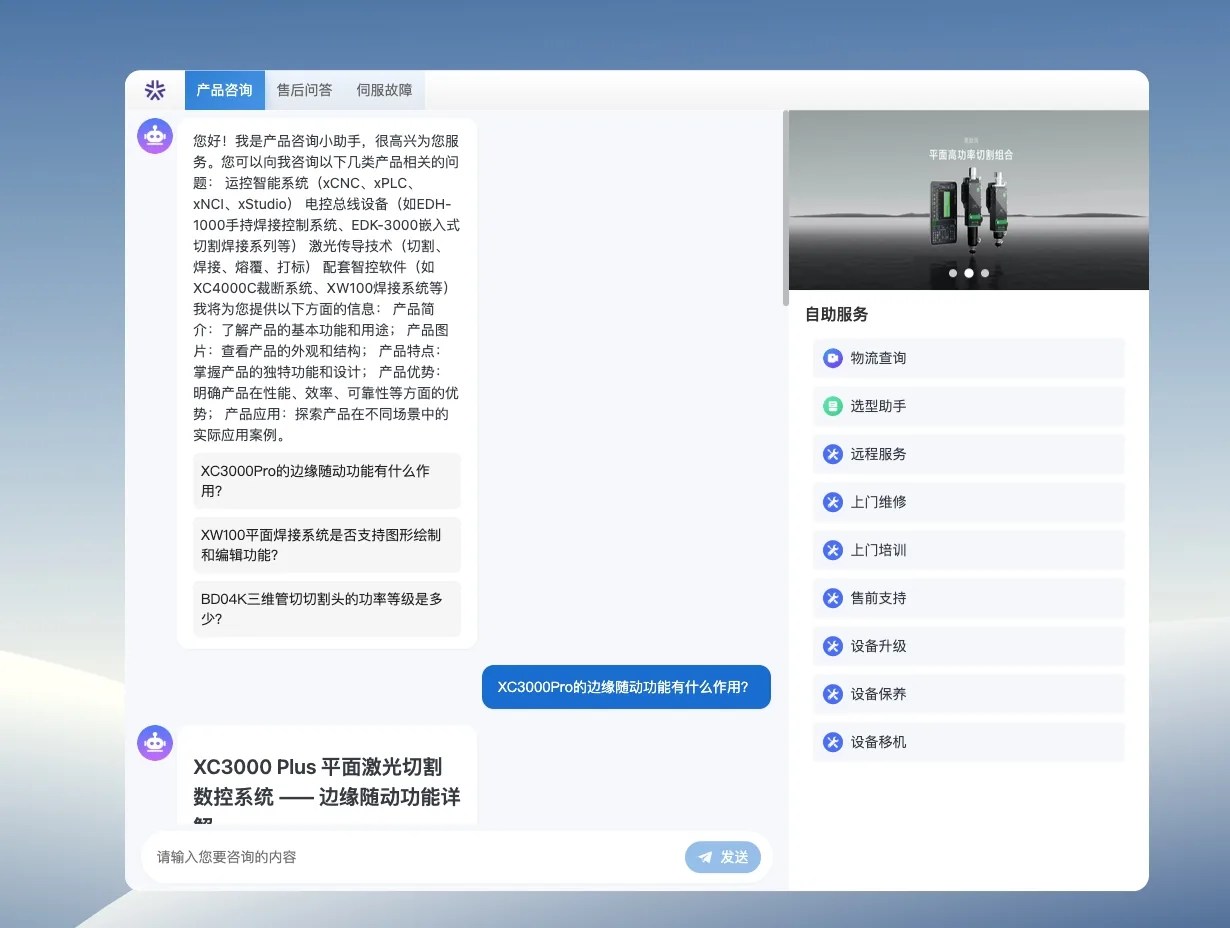
For machine builders, the installed base is the asset. Repair intake, equipment history, and maintenance reminders turn service into a renewal and product-feedback loop.

  1. Intake

    Repair requests arrive from any channel and land against the machine record, not a generic ticket.

  2. Resolve

    Product knowledge retrieval supports part lookup, configuration, and field troubleshooting.

  3. Maintain

    Service history drives maintenance reminders, spare part planning, and predictive contracts.

  4. Renew

    Usage and service signals surface renewal, upgrade, and expansion conversations before they lapse.

  5. Feed back

    Recurring field failures return to engineering as evidence for the next product revision.

Systems
CRM, after-sales service platform, equipment records, knowledge base
Outcome
Customer knowledge accumulates as a company asset instead of an individual's inbox
Guardrail
Role-based permissions and data isolation across customers

05 / Delivery control

See the delivery risk before the customer does.

Order-driven manufacturers lose delivery dates in the gap between ERP, the shop floor, and the customer's chat thread. This platform reads what your systems already know, finds the risk, and sends it to a named person. It does not replace ERP or MES.

What it reads

  • ERP orderscustomers, quantities, promised dates
  • Schedule detailmodel, surface finish, quantity, routing
  • Production actualsoutput, shortfall, stock, shipments
  • Tooling and equipmentdie life, trial runs, faults, maintenance
  • Conversationscustomer threads, work groups, knowledge base

Three-level delivery risk warning

  1. L1 Whole order not scheduled

    Near-due orders that have never entered the plan at all.

  2. L2 Line item not scheduled

    Which model, which surface finish, how many dies are available.

  3. L3 Production blocked

    Shortfall against plan, material stalled, parts repeatedly re-run.

Customer progress collaboration

  • A per-customer production progress sheet pushed on a schedule
  • Round-the-clock lookup by keyword, so nobody waits for an answer
  • One salesperson can hold many customer threads without falling behind

Key resource intelligence

  • Die life expiry with spare-die purchase reminders ahead of the run
  • Repeated trial runs, abnormal output, and high scrap surfaced early
  • Machine avoidance based on historical scrap and return records

Management briefing

  • Daily production report: output, achievement rate, shift performance
  • Must-do list, customer radar, and the facts affecting the business
  • Chat threads mined into opportunities, to-dos, complaints, and risk

06 / Customer operations

Find, qualify, answer, and hold onto the account.

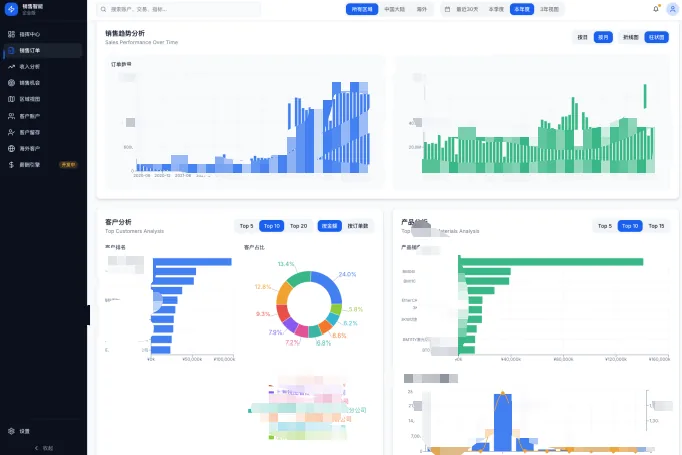
Export sales runs on three failures: prospects chosen by instinct, inquiries answered inconsistently, and accounts that break at handover. The same knowledge base that serves the shop floor can serve the sales desk.

  1. Find

    Product knowledge becomes search terms, then a list of target companies and named contacts.

  2. Research

    Public sources build a company profile, purchasing signals, and a read on fit.

  3. Answer

    The original inquiry plus the knowledge base drafts a specific reply; a person confirms before it sends.

  4. Hold

    Every exchange lands in the account file as a summary, an opportunity stage, and a suggested next step.

Why it matters for a machine builder

  • New hires answer at the standard of your best application engineer
  • Specification questions resolve against real product data, not memory
  • An account survives the salesperson who opened it

Document compliance review

  • Scheduled collection and batch intake of the documents under review
  • OCR across mixed formats, with key fields extracted as structured data
  • Four-level configurable rules checked by a rule engine and a model together
  • Errors located and annotated, so a person reviews exceptions instead of everything

07 / Operating discipline

AI needs an operating system underneath it.

The reference plant below ran a four-year World Class Manufacturing program to JIPM audit standard. We include it because it shows what the data layer has to support: a named baseline, losses broken into parts, standard work that prevents the problem returning, and benefits counted to the yuan.

Six pillars on two foundations

FIFocused improvementLock the major losses, attack them with cross-functional teams.
AMAutonomous maintenanceClean, inspect, lubricate, tighten — seven steps, operator-owned.
PMPlanned maintenancePreventive schedules, failure analysis, spare-part life management.
QMQuality maintenanceManage the defect conditions; move from inspection to prevention.
SHESafety, health, environmentRisk mapping, hazard source removal, predictive intervention.
E&TEducation and trainingSkill matrix, certification, single-point lessons that outlive people.

Foundation 1 · 5S Clean, sort, set in place, make it visual — so an abnormality is obvious at a glance.

Foundation 2 · Daily management Shift boards and 42 improvement teams, so improvement happens every day rather than every quarter.

Five meeting levels

  1. MonthlyManagement committee approves pillar progress and resources
  2. MonthlySix pillar meetings review indicators and cross-department blockers
  3. Weekly42 improvement teams report progress with on-site coaching
  4. DailyShift stand-up tracks safety, quality, delivery, and cost
  5. Rolling5S inspection with red-tag campaigns and closed-loop correction

Three improvements, and how they were found

Pipeline waste RMB 4.44M / year RMB 10,000 invested
Loss
Switching supply to the fillers meant pushing residual milk out of the line with water. Loss breakdown ranked this the single largest source of milk loss.
Cause
Five whys found operators judged push time by feel, and unstable water pressure meant the line was either under-cleared or over-pushed. Pressure stability was the real variable.
Fix
A pressure stabilizer, push time set by measured flow instead of experience, the method written into a single-point lesson, and the change rolled across every pre-treatment line.
Overfilling RMB 3.60M / year RMB 1,500 invested
Loss
Fill weight ran deliberately high to guarantee net-content compliance. A few grams per pack across millions of packs a day is a large invisible loss.
Cause
Box plots and distribution analysis quantified the variation. A gauge R&R confirmed the measurement was trustworthy, then eight equipment-side sources were isolated.
Fix
Clear the pipework, stabilize pressure, lubricate the volume cam, correct seal overlap, calibrate. Target locked at 212.5 g with net-content compliance held at 100%.
Startup loss 1.2 hours per start OEE +9.2 points
Loss
Cleaning, sterilizing, heating, waiting for material, and ramping accounted for 18% of all OEE loss — the largest single item of the sixteen.
Cause
Video plus roll-paper analysis broke the startup down second by second, exposing people waiting on machines, machines waiting on people, and wasted walking.
Fix
Four rounds of eliminate, combine, rearrange, simplify. Internal work moved external, serial steps ran in parallel. Startup loss fell from 18.0% to 11.9% of the total.

Maintenance strategy by consequence

Equipment was graded on safety and quality impact, then given the cheapest strategy that fit. Attention concentrated on the 16% of machines that could actually hurt.

  • A · 16%Major safety or quality impact. Condition monitoring plus corrective redesign.
  • B · 12%Moderate impact. Time-based maintenance on a fixed cycle.
  • C · 72%Minor impact. Run to failure, with operator autonomous maintenance.
  • 125 machinesunder condition monitoring across seven methods, including motor temperature indicators, tensioner limit visualization, air-knife current, and filter differential pressure
  • 2,000 → 4,000 hblade replacement interval, extended after distribution analysis proved the real service life
  • RMB 1.79Mfreed by returning dead spare stock to suppliers, with a further RMB 350,000 cut from opening inventory

What was left behind

42improvement teams running as normal operations
8,600defect tags raised and closed by the workforce
1,239single-point lessons turning experience into standards
60certified specialists, from a starting point of zero
83.1%skill matrix conformance, also from zero
600+improvement suggestions submitted by employees

On site

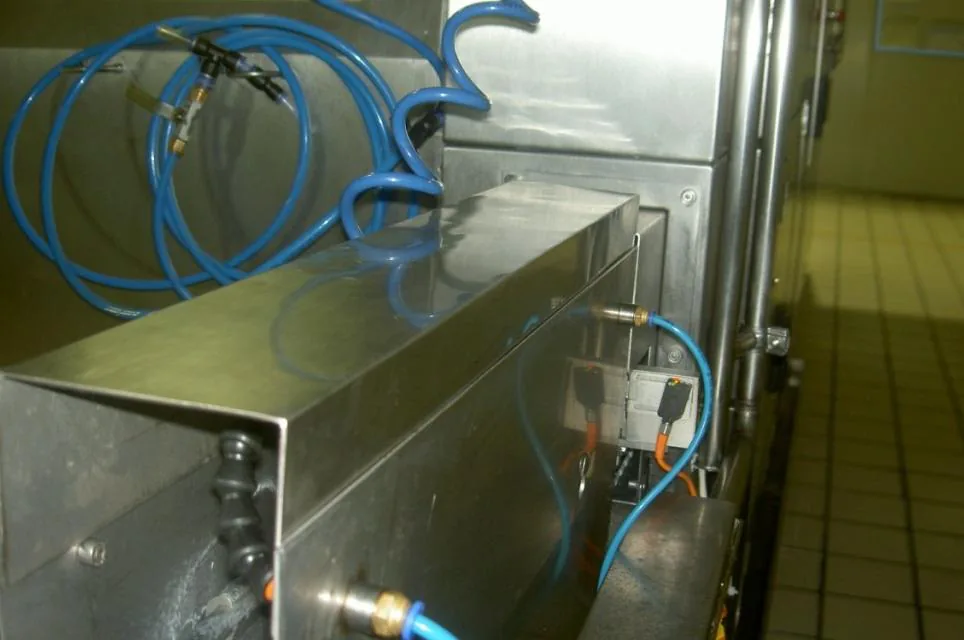
Stainless steel aseptic filling equipment with pneumatic tubing and sensors on a tiled plant floor.
Aseptic filling — the bottleneck process, and where the first pillars landed.
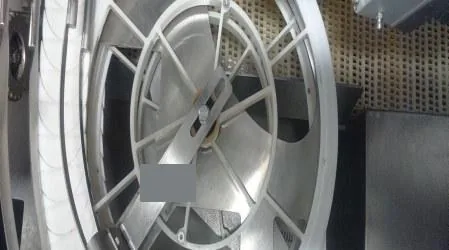
Close-up of a filling valve wheel assembly inside the machine.
Filling valve wheel. Equipment condition here sets plant OEE and quality.
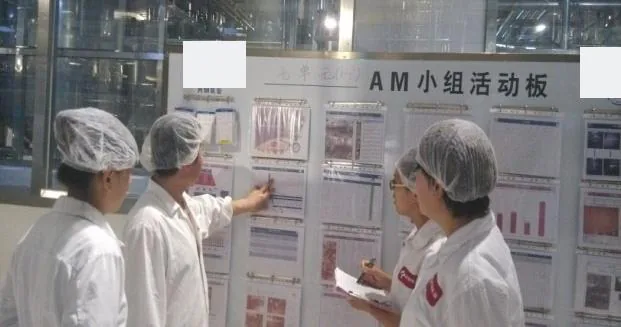
Operators in white coats and hairnets reviewing an autonomous maintenance team activity board on the production floor.
An autonomous maintenance team reviewing its activity board at shift change.
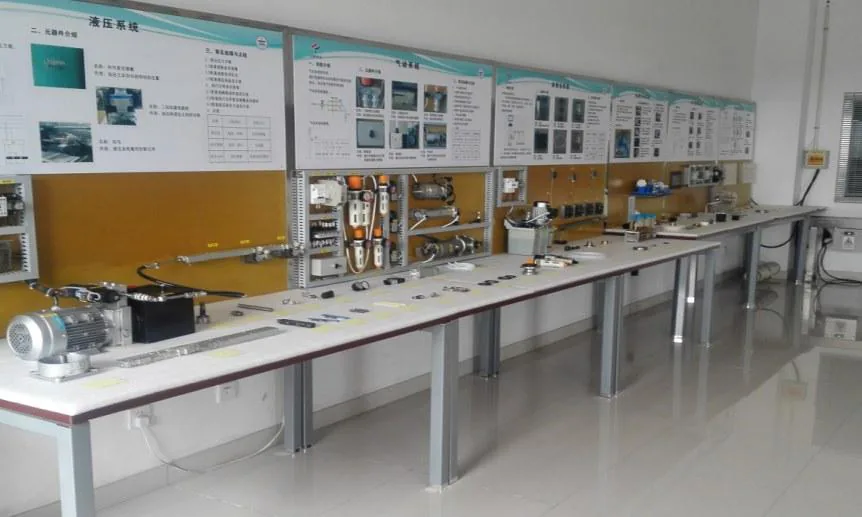
In-plant training room with hydraulic and pneumatic component display boards and hands-on benches.
The in-plant training dojo: hydraulics, pneumatics, and hands-on component practice.
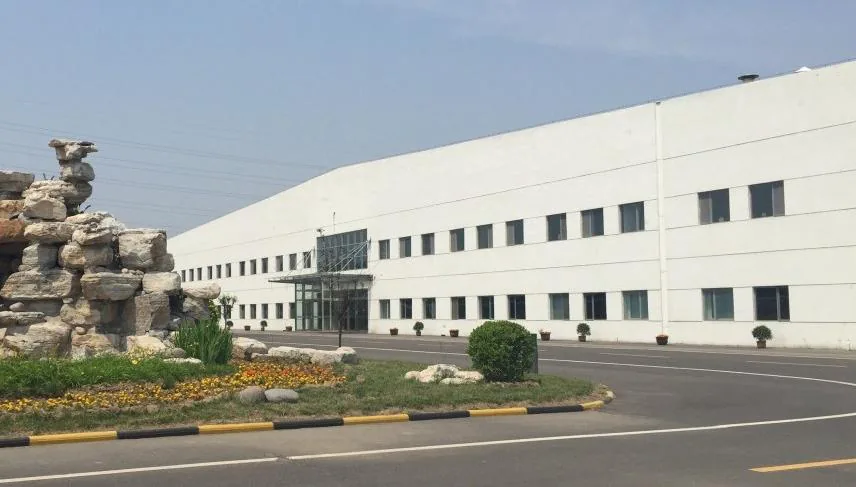
Exterior of a large single-storey manufacturing plant with landscaped grounds.
The flagship plant: 440 staff, 22 aseptic filling lines, three continuous shifts.
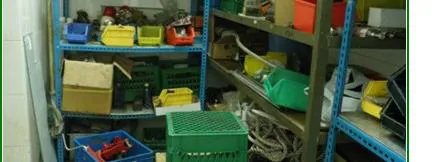
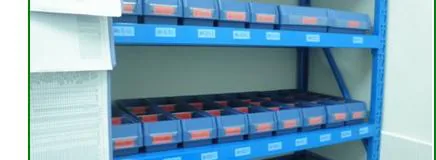
Spare parts shelving with mixed boxes, loose components, and crates stacked without order. The same shelving reorganized into uniform labelled parts bins in tidy rows.
Spare parts storage, before and after. Stock records finally matched the shelf.

08 / Reference outcome

What disciplined operations can deliver.

A four-year World Class Manufacturing program at an anonymized process plant — 440 staff, 22 aseptic filling lines, roughly 690 tons per day. It is the operating discipline our platform is designed to support: baseline definition, loss visibility, standard work, and verified results.

Baseline year compared with year four
Indicator Before After Change
Overall equipment effectiveness57.0%80.3%+23.3 pts
Manufacturing cost per tonRMB 9,373RMB 7,437−20.7%
Monthly breakdowns~30079−74%
Breakdown time share5.5%1.01%−82%
Repair cost per tonRMB 99.92RMB 79.50−20%
Product defect rate0.82%0.25%−70%
Complaints per 100,000 packs0.350.11−69%
Material loss rate10.6%7.45%−30%
Packaging yield98.01%98.83%+0.82 pts
Annual safety incidents360eliminated
Water consumption6.7 t/t5.33 t/t−20%
Electricity consumption157.2 kWh/t151.4 kWh/t−4%
Natural gas consumption38 m³/t29.5 m³/t−22%
Labor productivity0.37 t/person/day0.47 t/person/day+27%
  • RMB 15.6Mcumulative benefit from focused improvement, against one-off investments measured in thousands
  • Beyond 1:100return on improvement spend across the ranked project list
  • Zerosafety incidents from year three onward, sustained

Attribution boundary: this is a reference manufacturing transformation case drawn from an anonymized client review. It is not a KUNWU deployment and the figures are not presented as platform results.

09 / How we start

Engineering close to the real workflow.

Customer-embedded delivery begins with one measurable workflow. We connect real data, run a controlled pilot, verify the outcome, and keep only the patterns that can become a reusable capability.

  1. On-site discovery
  2. Baseline
  3. Controlled pilot
  4. Verified outcome
  5. Reusable capability
AI recommends and optimizes. Deterministic PLC/CNC control executes. Independent safety interlocks retain final authority.

10 / On the show floor

Meet Starry Wang in Chicago.

Starry founded KUNWU and builds industrial AI systems that connect machine protocols and edge computing with domain knowledge, agents, and enterprise workflows. Mechanical engineering and computer science at Huazhong University of Science and Technology, cloud infrastructure at Intel China, iOS core modules at Apple in Silicon Valley, and platform work inside major manufacturers.

  • Industrial connectivity: OPC UA, MQTT, Modbus, REST, events
  • Edge and private AI, on-premises deployment, knowledge governance
  • Agents for service, maintenance, planning, and shop-floor coordination

Research collaboration. Starry serves as Chief Industrial AI Expert at the Industrial Technology Innovation Center, HUST–Wuxi Research Institute (Huazhong University of Science and Technology). Joint research and industry resources accelerate technical validation and deployment.

11 / IMTS meeting

Reserve 20 minutes in Chicago.

Tell us who you are and what you want to discuss. We reply from hello@yixuai.cn with a confirmed time, usually the same day.

Save contact card